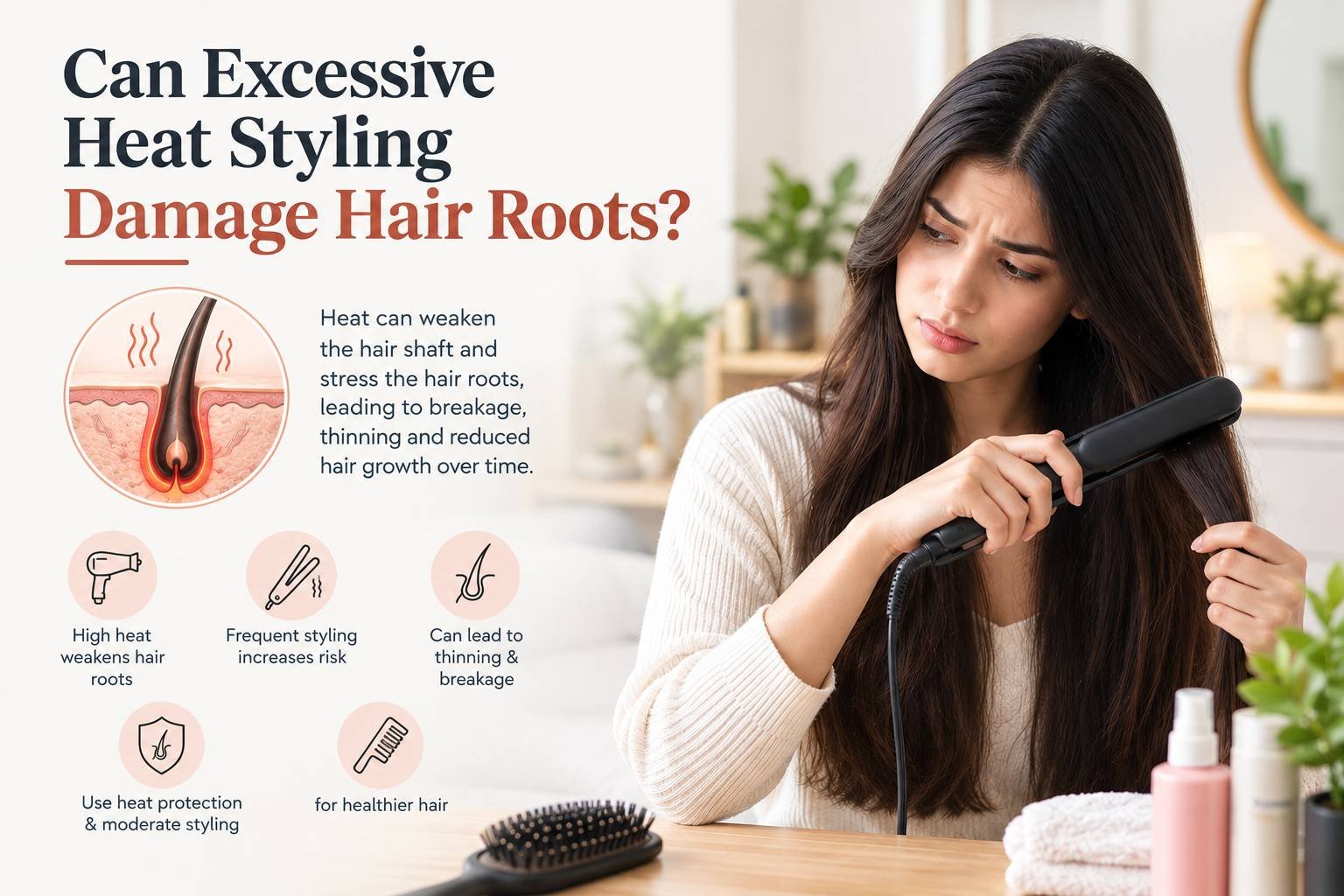
With straighteners, curling irons, blow dryers and hot brushes, you can change your hairstyle within minutes. Nevertheless, excessive use of these tools may have an insidious impact on the health of hair. Although the primary effect of heat styling is on the visible hair shaft, repeated or excessive exposure to heat can also have effects on the scalp and the surrounding of the hair follicles. If you are noticing unusual shedding or weaker hair, searching for a hair doctor near me can be a useful first step toward understanding what is happening.
How Heat Affects the Hair Shaft
Keratin is a protein that forms the structure and strength of each strand, and it is the main component of hair. This protein may be weakened by high temperatures and the outer cuticle may be destroyed. Hair can lose its smooth texture and become more susceptible to breakage, split ends, dryness, and frizz as the cuticle becomes rougher.
This kind of damage can cause hair to appear thinner although the number of follicles may not have been altered. Strands that are broken can be lost during brushing and washing, giving the impression of more hair loss. A hair doctor near me can help determine whether apparent thinning is caused mainly by breakage or whether genuine shedding from the roots is occurring.
Can Heat Reach the Hair Roots?
Hair roots are located inside follicles beneath the scalp, which provides some protection from the heat applied to the hair shaft. In typical styling circumstances, a straightener or curling iron will not directly heat the follicle as much as it heats the strand.
This is different when very hot tools are placed near the head or applied to the skin. Excessive temperatures can cause scalp burns and inflammation. Serious or frequent head trauma can possibly damage follicles, especially when tissue is severely damaged. This is one reason it is important not to apply extreme heat directly to the scalp.
Scalp Burns Are a Bigger Concern
A quick styling session that leaves your hair feeling dry is quite different to a scalp burn. The presence of pain, redness, blistering, tenderness, crusting, or chronic sensitivity following heat exposure cannot be dismissed as normal styling damage.
If the scalp has been burned, avoid applying additional heat until the area has recovered and seek appropriate medical advice. Major injury may cause skin damage and in severe cases, follicles may be affected. Anyone experiencing persistent changes in hair growth after a scalp injury may benefit from evaluation by a hair doctor near me.
Frequency Matters More Than One Styling Session
Occasional use of a heated tool is not likely to result in the same amount of cumulative harm as everyday styling. When hair is subjected to high temperatures repeatedly it has less time to lose moisture and retain a cuticle.
Your styling routine also matters. Damage can be increased by using the hottest setting, passing over the same area multiple times or heating damp hair. Temperature reduction and repeated passes can be reduced to a considerable extent to reduce unnecessary stress on the hair.
Heat Protectants Can Offer Extra Protection
Heat-protectant products are made to form a protective coating on the hair and minimize the effects of thermal styling. They are not able to render frequent high-temperature styling entirely harmless, but they may be helpful as a component of a more cautious routine.
Use the product as per the instructions and apply it evenly across the sections you intend to style. Allowing hair to dry appropriately before using a flat iron or curling tool is also important. If your hair remains fragile despite changing your routine, a hair doctor near me can assess whether another cause may be contributing to the problem.
When Hair Loss Needs Professional Attention
Not all instances of shedding hair are due to heat. Hormonal changes, nutritional deficiencies, stress, scalp conditions, medications, genetics, and other factors can contribute to genuine hair loss. When you see the widening part lines, exposed scalp, receding areas, or chronic shedding, the cause is worth consideration.
Breakage and follicle-related hair loss can be differentiated by professional evaluation and treated accordingly. If you are looking for a hair doctor near me, choose a qualified specialist who can examine your scalp and hair rather than relying solely on the appearance of damaged strands.
Build a Gentler Styling Routine
Heat styling does not necessarily have to be out of your routine. The aim is to be more mindful of it by turning down the temperature, decreasing the frequency, safeguarding the hair, and avoiding direct contact of hot tools with the scalp. When damage or shedding continues despite gentler habits, consulting a hair doctor near me can help you identify the real cause and protect your hair for the long term.
Ready for Stronger, Fuller Hair? Schedule Your Appointment!