Flaky Scalp or Dandruff? Understanding the Difference
Seeing white flakes on your shoulders can be frustrating, especially when you are unsure what is causing them. A flaky scalp and dandruff may appear similar but they are not necessarily the same issue. Scalp flakes can be visible due to dryness, product buildup, irritation, and certain scalp conditions. Understanding the difference can help you choose appropriate care and know when to consult a hair doctor near me.
What Does a Flaky Scalp Mean?
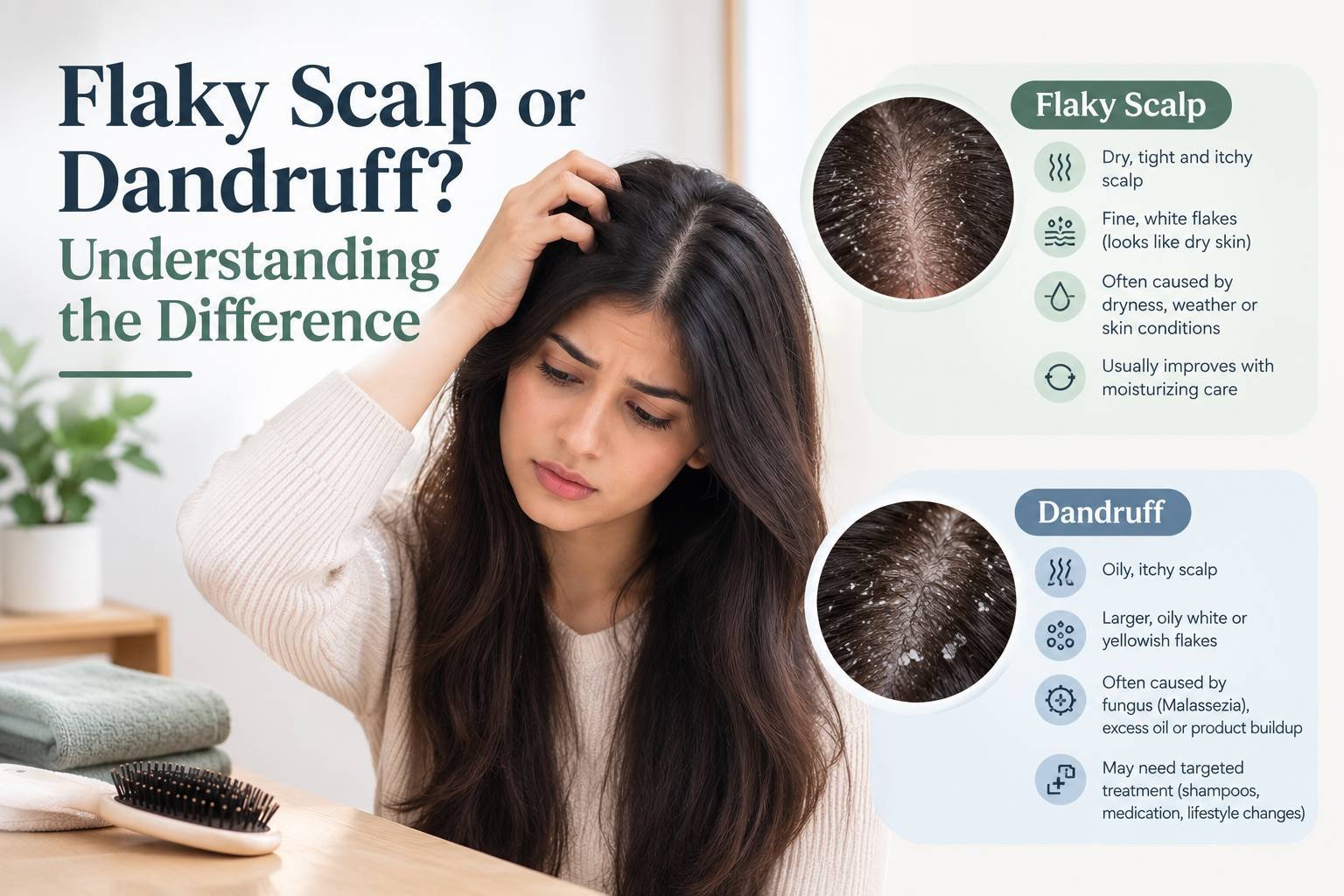
When the skin loses excessive moisture, a flaky scalp may develop. Scalp dryness may be caused by cold weather, dry indoor air, frequent washing, hot showers, or harsh hair products. The flakes are often small, light, and relatively loose, while the scalp may feel tight or mildly itchy.
Dryness does not always imply that your scalp is producing insufficient oil in general. There are individuals who are temporarily dry due to the fact that their cleaning regimen is too harsh in removing natural oils. Replacing harsh products and using very hot water can be replaced by gentler ones and help to regain the comfort. If flaking continues despite these changes, a hair doctor near me can assess whether another scalp condition is involved.
What Exactly Is Dandruff?
Dandruff is linked with the presence of more shedding of the scalp skin and may include an oily or inflamed scalp. It is commonly associated with seborrheic dermatitis, but mild dandruff may exist without much inflammation. The flakes can be bigger, greasier, or more conspicuous than those brought about by mere dryness.
As opposed to a normal dry scalp, dandruff can be accompanied by itching, redness, or greasy spots. It can also become more noticeable during periods of stress, hormonal changes, or colder weather. Since several scalp conditions can produce similar symptoms, persistent dandruff may warrant an examination by a hair doctor near me.
Look at the Type of Flakes
The flakes themselves may give some hints. Dry scalp flakes are smaller, finer and lighter in nature. They can easily fall when you brush or move your hair, especially when the scalp is dry or tight.
The dandruff flakes might be larger and can have a slightly yellowish or oily look. They can stick to the scalp or hair more readily. However, appearance alone cannot provide a definite diagnosis, so recurring or severe flaking should not be judged solely by what you see.
Itching Can Point Toward Irritation
Dryness or dandruff may be accompanied by mild itching. Scratching, on the other hand, may harm the surface of the scalp and cause more irritation. The skin can also break in small places due to repeated scratching, which worsens discomfort.
Itching that is more persistent with redness, greasy scaling, or inflammation can indicate something other than normal dryness. Individuals with such symptoms need to think about professional assessment instead of constantly switching shampoos. A hair doctor near me can examine the scalp and identify patterns that may not be obvious at home.
Your Hair-Care Routine Can Make a Difference
The way you wash and style your hair can make your scalp feel good. Irritation can be enhanced by using very hot water, vigorous scrubbing, harsh styling products, or inappropriate shampoos. Washing too frequently can also worsen dryness for some people, while infrequent cleansing may allow oil and product residue to accumulate.
Select items based on your scalp requirements and not just trends. Wash your hair and do not scratch your nails. If you have tried reasonable routine changes without improvement, discussing the problem with a hair doctor nearme may help you find a more suitable approach.
When Should You Seek Professional Help?
Mild flaking can be improved with occasional changes in your hair-care routine. Chronic symptoms should be given greater consideration, especially when they include severe itching, erythema, thick scaly, ulcers, or visible hair loss.
A professional examination can help distinguish dandruff from dryness and other scalp disorders. Early diagnosis can also help avoid the continued irritation becoming more difficult to control. Consider seeking specialist guidance if your scalp remains flaky despite consistent, gentle care.
Final Words
Flaky scalp and dandruff can look alike, but they can have different causes and symptoms. Do not assume that all forms of flaking are dandruff. Monitor your symptoms, have a mild hair-care regimen, and consult a professional when the symptoms continue. Consulting a qualified hair doctor near me can help you understand the cause of recurring flakes and choose appropriate scalp care.
Ready for Stronger, Fuller Hair? Schedule Your Appointment!