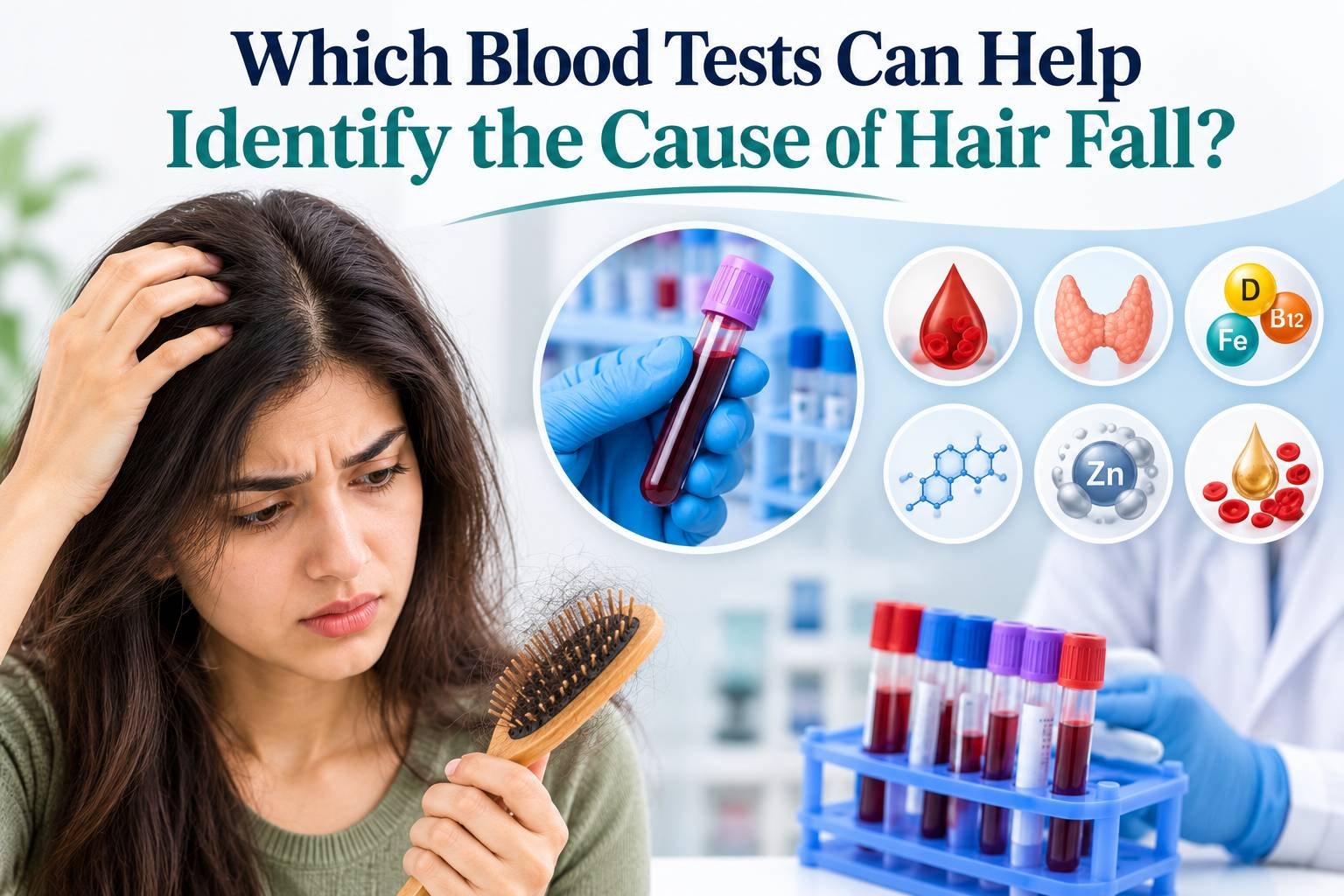
Which Blood Tests Can Help Identify the Cause of Hair Fall?
Discovering additional hair on your pillow, comb, or shower floor may be a cause of concern about your scalp and general health. Hair loss can be caused by nutritional deficiencies, hormonal variations, thyroid diseases, stress, or genetic conditions. It is important to determine the cause before selecting a suitable treatment. Consulting a hair doctor near me can help determine whether blood tests are necessary for your symptoms.
Not all individuals with hair fall require a comprehensive lab test. Physicians typically start by looking at medical history, scalp examination, and when shedding began. On the basis of these results, they can prescribe specific tests to determine conditions that might influence normal hair growth.
1. Complete Blood Count (CBC)
Complete blood count is a test that determines various blood elements, such as red blood cells, haemoglobin, white blood cells, and platelets. It can assist in the detection of anaemia that can be a cause of fatigue and a sign of a potential underlying nutritional or medical issue.
Physicians can prescribe a CBC in case of hair loss and fatigue, excessive menstrual bleeding, or limited food consumption. Nevertheless, normal outcomes do not exclude depleted iron stores, and further testing might be required.
2. Ferritin and Iron Profile
Ferritin is a protein that indicates the stored iron in the body. Low iron stores can also be a cause of excessive shedding of hair in some individuals especially when combined with iron deficiency or anemia. Physicians can thus prescribe ferritin testing in the investigation of chronic hair loss.
Serum iron, transferrin saturation, and total iron-binding capacity may also be part of an iron profile. These measurements give more information regarding the availability of iron. A hair doctor near me can help determine whether these tests are appropriate and interpret the findings alongside your symptoms. Avoid taking iron supplements without medical advice.
3. Thyroid Function Tests
The thyroid gland secretes hormones that control metabolism and affect various body processes, such as the hair growth cycle. Underactive and overactive thyroid conditions can also be a cause of diffuse shedding or hair texture changes.
A thyroid-stimulating hormone (TSH) test is a common test used by doctors to evaluate thyroid functioning. Depending on the result and symptoms, they may also request free thyroxine (Free T4) or other thyroid tests. Diagnosing a thyroid condition may assist in treatment when it is a cause of hair loss.
4. Vitamin D Test
Vitamin D aids in a number of biological functions and scientists have explored its connection with the functioning of hair follicles. Some hair loss disorders such as alopecia areata have been linked to low levels of vitamin D. Nevertheless, the association does not determine that deficiency is the cause of all forms of hair fall.
Vitamin D status can be determined by a blood test of 25-hydroxyvitamin D. It can be prescribed by your doctor when your medical history or other symptoms indicate a potential deficiency. Treating a proven deficiency is beneficial to general health, but supplementation is not a guarantee of hair growth.
5. Vitamin B12 and Other Nutrient Tests
Vitamin B12 assists the body to generate healthy red blood cells and normal nerve functioning. Deficiency may be caused by limited diets, absorption issues, or some medical conditions. Though it is not a universal cause of hair fall, testing can be suitable in presence of risk factors or other symptoms.
Physicians can also use zinc or other nutrient tests when dietary intake, medical history, or examination indicates a deficiency. Testing should remain targeted rather than relying on large packages that check every nutrient. A hair doctor nearme can help prioritise investigations according to your individual circumstances.
6. Hormone Tests
Hormonal fluctuations may affect hair growth, especially when it is thinning with irregular periods, acne, or more facial hair. In some cases, physicians can explore disorders like polycystic ovary syndrome (PCOS) or other sources of androgen overload.
Testing can be done on total or free testosterone, dehydroepiandrosterone sulfate (DHEA-S), or other applicable hormones depending on your symptoms. Not all people who experience hair fall need these tests. Depending on your symptoms and medical history, a clinician will determine which measurements are helpful.
Which Tests Should You Get First?
No single blood test can determine all the causes of hair loss. When the history indicates anemia, low iron stores, or thyroid dysfunction, your doctor can start with a CBC, ferritin, or TSH test. Other examinations rely on nutritional risks, hormonal symptoms, and potential underlying conditions.
A scalp examination cannot be substituted with blood tests either. Pattern hair loss, inflammation of the scalp, alopecia areata, and some infections might need alternative methods of diagnosis. If shedding persists or bald patches develop, a hair doctor near me can assess your scalp and recommend further investigations when necessary.
Conclusion
Blood tests may be used to diagnose nutritional deficiencies, thyroid diseases, anaemia, and the chosen hormonal issues that can cause hair fall. The correct mix is based on your symptoms, medical history, and scalp examination.
Do not take unnecessary tests and self-prescribed supplements. Consulting a qualified hair doctor near me can help you understand your results, investigate possible causes, and choose a suitable treatment plan for healthier hair.
Ready for Stronger, Fuller Hair? Schedule Your Appointment!